Mood Board and Its Importance in the Design Process
- Ananya Banka
- Mar 7, 2022
- 5 min read

Updated: Mar 29, 2022
Hello! I'm back with another post that is going to talk about the importance of mood boards in the design process. This post will tell you what mood boards are, what are the different kinds of boards used for fashion and how to make one. Continue reading to know more!
What are mood boards?
Mood boards are physical and digital collages that arrange images, materials, text and other design elements into a format that is representative of the final design's style. They are used to convey the emotional communication of an intended design. They may also include samples of colors and fabrics.
Why are mood boards important?
Mood boards are important for designers as they are a powerful tool and can maximize the creative process. They allow to collect inspiration, thoughts and ideas. They also help designers to stay on track and consistent with the design idea.
Mood boards are made in the beginning stage of a design process. They help communicate a high concept idea in a creative way. After brainstorming, mood boards help to narrow down the design ideas.
What is the difference between a physical and a digital mood board?
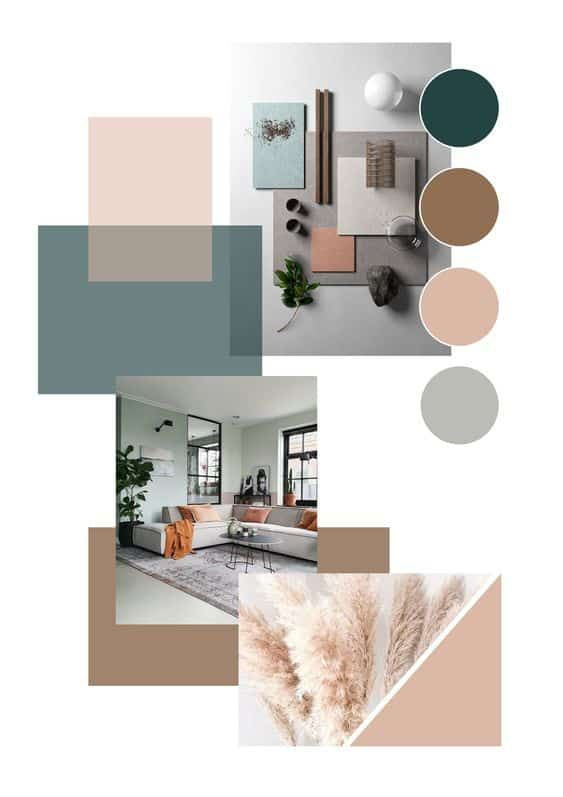
Physical mood boards are the traditional way of creating boards. Typically, they are laid out on a piece of foam board and pictures related to the theme are cut out and pasted on it. Images can be layered on top of each other so that they completely cover the board and give a little sense of abstractness.
Here is an image I found online for reference. The pictures related to the theme are cut out and put together on a board.

Digital mood boards are just easier to create. They allow to easily incorporate images from the internet or even photographs. They are usually created using design tools and easy to share with people.
What are the different types of mood boards in the design process?
There are 3 kinds of boards- inspiration board, mood board and look board that serve different purposes during the design process. Lets understand what each of them are-
#1 Inspiration Board
An inspiration board is a board of collage of images, works and object that has inspired the design. It can include anything from doodles, images, fabrics to swatches. Many a times an inspiration board and mood board are thought to be the same thing but both are very different from each other. An inspiration board is a collection of reference images and other things that form the source of the muse while a mood board is more of an end product, before starting with the actual design process, determining the best idea and the look and feel of it.
#2 Mood Board
Mood boards are influenced by the inspiration boards. They too are a collection of images, doodles, fabrics and swatches but of some particular ideas from the inspiration board. Mood board is the starting of the design process. It helps the designer to stay on track and not drift away from the actual and final ideas. It also helps to narrow down the brainstormed ideas and get a clear vision.
#3 Look Board
A look board is the visual presentation of the final output from the design process. The elements from the inspiration and mood boards are used to come up with the idea for the looks of the collection. It shows the styles, styling of the garments, color palettes and even garment construction. These could be either sketches or photographs or images from the internet.
For the mood board that I created, I chose Vernorexia - which translates to the feeling of romance with the arrival of springtime - as the theme. Springtime is loved by all because it is all floral, breezy and calm and the idea of romance and springtime together is just beautiful.
There were 3 steps involved in the making of the mood board:
#1 Brainstorming
There are a lot of ideas that come to mind while creating a mood board. Noting down all of those, including colors, textures, forms, materials, muse, etc. is very important.
I had too many ideas in my mind when I started thinking about vernorexia. From floral prints to fabrics like satin and organza to colors like pastels, reds, and pink, I jotted down every single one of them.
This word art below is made using the wordart.com website. Its pretty fun to make. All you have to do is add in your brainstormed keywords, choose colors and fonts and wait for it to make a word art for you.

#2 Collecting Elements
Illustrations, artworks, fabrics, color swatches, photographs, letterings, anything can contribute to the making of the mood board. Thinking out of the box and collecting images from the internet (if you are making a digital one) could sometimes be a task. But once a mind map is made, collecting elements becomes easy if we stick to the map.
For my digital mood board, I went with florals, satin, Paris, mirrors, hearts and the colors reds, whites and pinks. Here are some of the pictures I selected for my mood board.


#3 Curating and Presenting
Curate by choosing images and samples that come together harmoniously. Arranging the pictures in a proper way is important. The board should not look too empty or too crowded. The number of pictures should also be limited.
This is the final mood board that I created for my mood, Vernorexia. It is not always easy deciding which pictures to keep and which ones to remove from the board. I had to make multiple boards before finalizing on this one.

Creating a mood board is very important in the design process. It helps to hone to our ideas and vision without going off track. Mind mapping is also very important to start with the mood board. I had many ideas and inspiration for my mood board but I had to narrow them down in order to create a mood board which did not seem too crowded. The mood board, inspired by romance and springtime turned out pretty well. It has colors, textures and images inspired by love and spring. For me digital mood boards are just easier and faster to create. Any changes needed can be done easily and it can also be shared with people easily.
Thank you for reading this post! I hope it helped in understanding the boards better. Stay tuned for the next post, which is going to be about pantone and color extraction. You can always subscribe for more such content :)
REFERENCES
Pattern Curator SUN RAYS (2019). Available at: https://www.patterncurator.com/blog/sun-rays (Accessed: 18 March 2022).
How To Create The Perfect Interior Design Mood Board (2021). Available at: https://alusplash.com/how-to-create-the-perfect-interior-design-mood-board/ (Accessed: 18 March 2022).
(2022) I.pinimg.com. Available at: https://i.pinimg.com/736x/fd/72/25/fd722524b343355eeaa51cfb91a4358e.jpg (Accessed: 18 March 2022).
Inside a Skincare Studio in L.A. That Exudes California-Cool Vibes (2022). Available at: https://www.mydomaine.com/heyday-la-studio-tour (Accessed: 18 March 2022).
The importance of fashion boards in developing a fashion collection (2020). Available at: https://www.jdinstitute.edu.in/the-importance-of-fashion-boards-in-developing-a-fashion-collection/ (Accessed: 18 March 2022).
INSPIRATION NATION - Mood (2015). Available at: https://inspirationnation.blogg.se/2015/december/mood.html (Accessed: 18 March 2022).
collin, V. (2018) créer un moodboard, une planche tendance avec Photoshop, Formation sur-mesure image numérique & graphisme. Available at: http://www.clarimage.com/creer-un-moodboard-planche-ambiance/ (Accessed: 18 March 2022).


Comments